solar pv solutions
Residential
Homeowners with properties constructed and occupied on or prior to December 31st, 2020, and without previous solar photovoltaic (PV) funding, are eligible for the Sustainable Energy Authority of Ireland's (SEAI) €1,800 solar electricity grant. At ERRIBUL, we offer services designed to streamline the solar PV installation process for customers, ensuring peace of mind through our adherence to rigorous design and installation quality standards.
Our comprehensive approach encompasses the following key elements:
Site suitability assessment conducted by a qualified QQI solar PV installer with specialised training.
Grant application facilitation, with ERRIBUL handling the process on behalf of the homeowner and deducting the grant amount from the overall cost.
Where possible, we prefer to install a suitable Inverter and Battery external to the dwelling, alleviating any potential risks. (It is not advisable to install inverters or batteries in an Attic space due to immense variations in temperature.)
Our quotations include bird protection strips, preventing avian access to areas behind the PV panels.
All installations adhere to the highest standards, complying with the Irish Standard 10101 and the SEAI Code of Practice.
.
.
Solar PV Solutions
What is Solar PV?
Solar PV (Solar Photovoltaic) is a technology that converts daylight directly into electricity. Unlike solar thermal systems that heat water, Solar PV produces usable electrical power for homes, farms, and businesses. The panels are made up of photovoltaic cells, usually silicon-based semiconductors, which react when exposed to light and create an electrical flow.
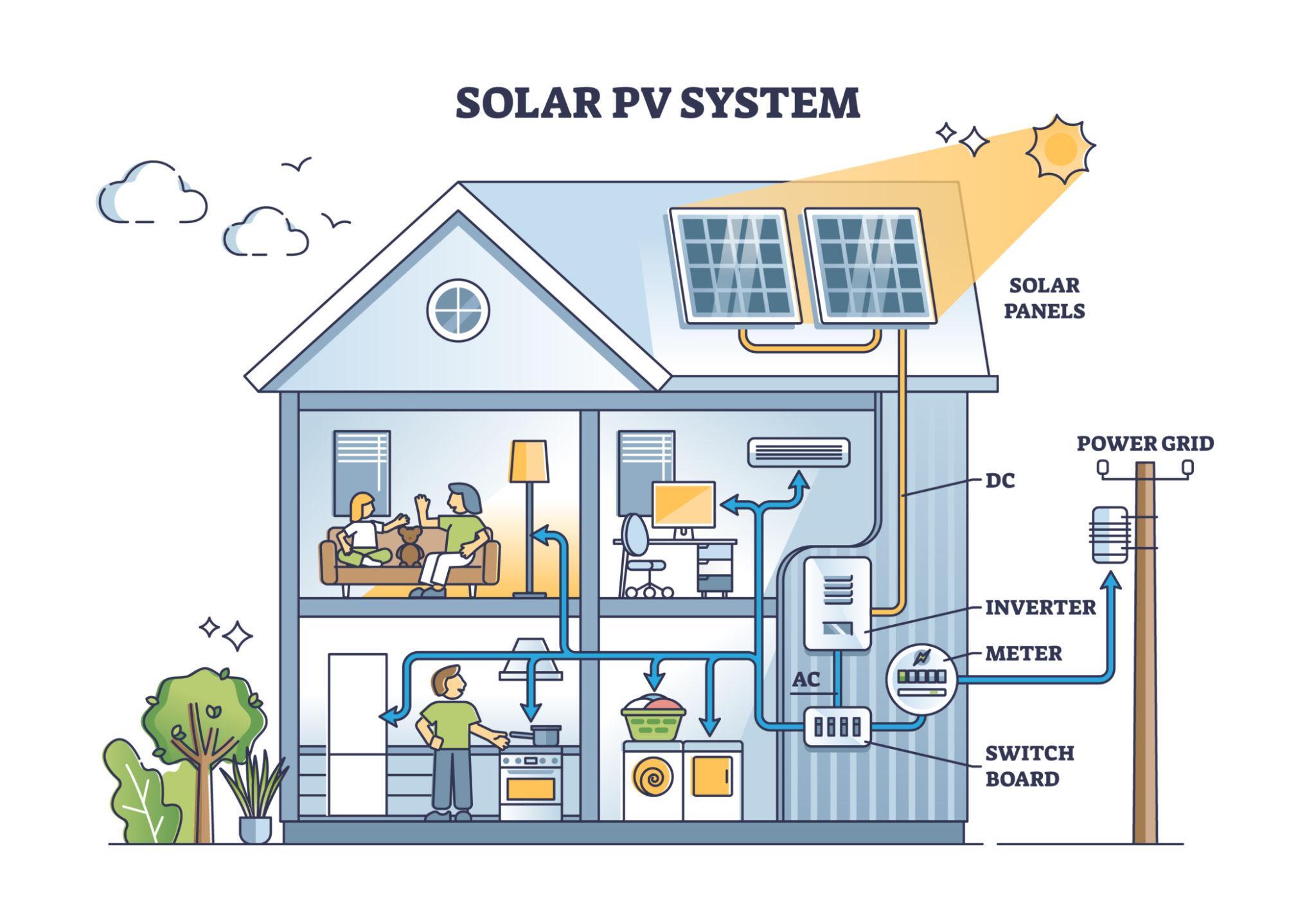
When daylight reaches the panel surface, energy particles called photons strike the cells and knock electrons loose inside the material. This movement of electrons creates direct current (DC) electricity. Because buildings use alternating current (AC), the electricity passes through an inverter which converts it into standard power suitable for lights, sockets, machinery and appliances.
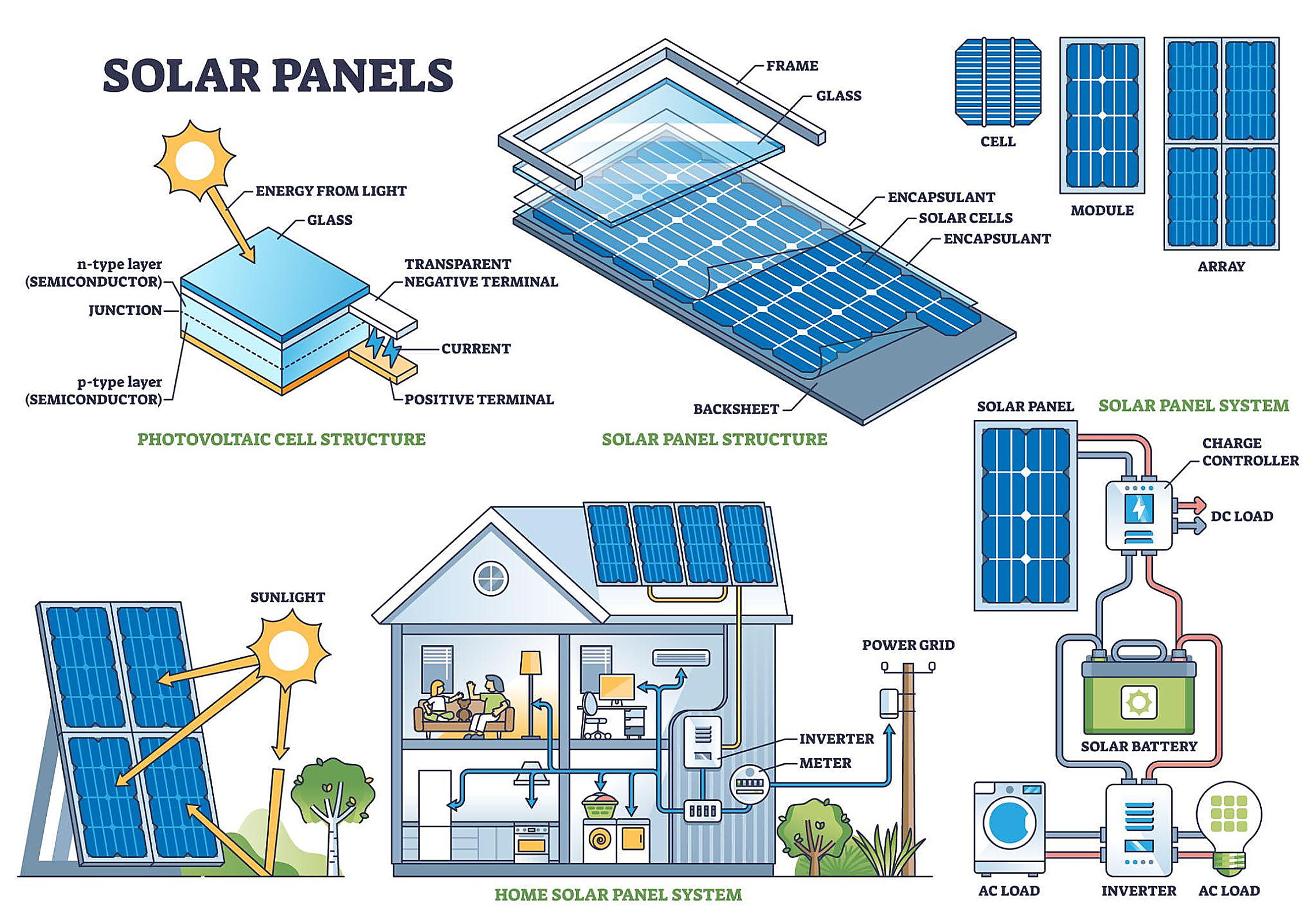
The electricity produced is prioritised for use within the property first. If more energy is generated than is needed at that moment, it can either charge a battery for later use — such as nighttime or peak tariff periods — or be exported back to the national grid. When the system is not producing enough electricity, power is automatically imported from the grid as normal. The entire process is fully automatic and requires no manual switching.
Solar PV works all year round. It does not rely on heat and performs well even on brigh,t cloudy days because it uses daylight rather than direct sunshine. Ireland’s long summer daylight hours allow systems to generate a large portion of annual electricity during spring and summer, while still providing useful production in winter months.
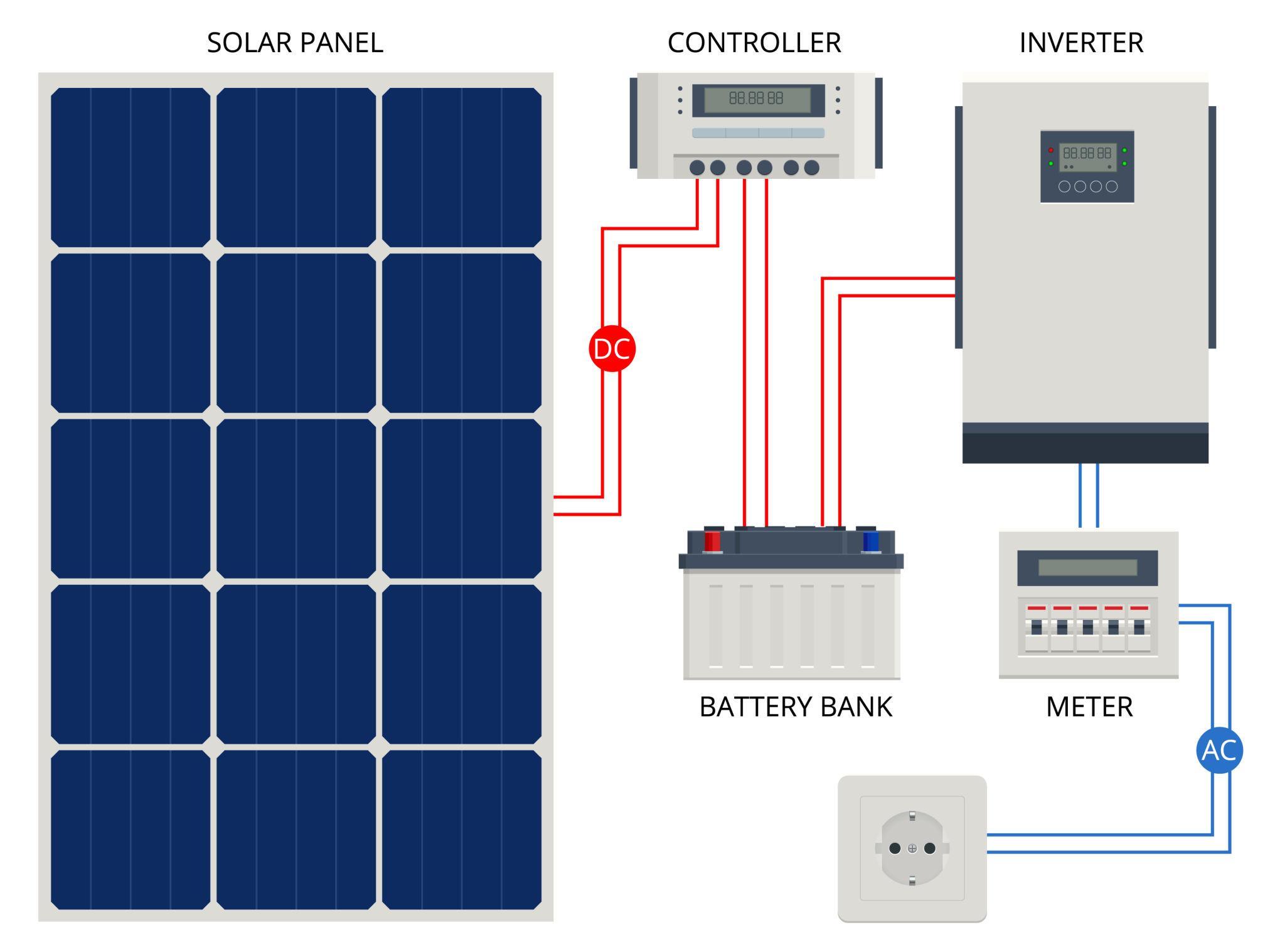
A typical system includes:
Solar panels to generate electricity
Mounting system to secure panels safely to the roof or ground
Inverter to convert electricity into usable power
Optional battery storage to store unused energy
Meter connection to track the import and export of electricity
Solar PV systems have no moving parts, operate silently, and require minimal maintenance beyond occasional inspection and cleaning. Most panels carry performance warranties of 25 years or more, making them a long-term energy investment.
By generating electricity on site, Solar PV reduces energy bills, lowers carbon emissions, and protects against rising electricity prices. It also improves energy independence by allowing a property to produce a significant portion of its own power rather than relying entirely on external suppliers.
In simple terms, Solar PV turns unused roof space or land into a small power station — producing clean, renewable electricity every day the sun rises.

© 2025